
What Is A CPR? Condominium Property Regime Explained

by Ryan Nunez

Untitled design (69)

What Is A CPR? Condominium Property Regime Explained
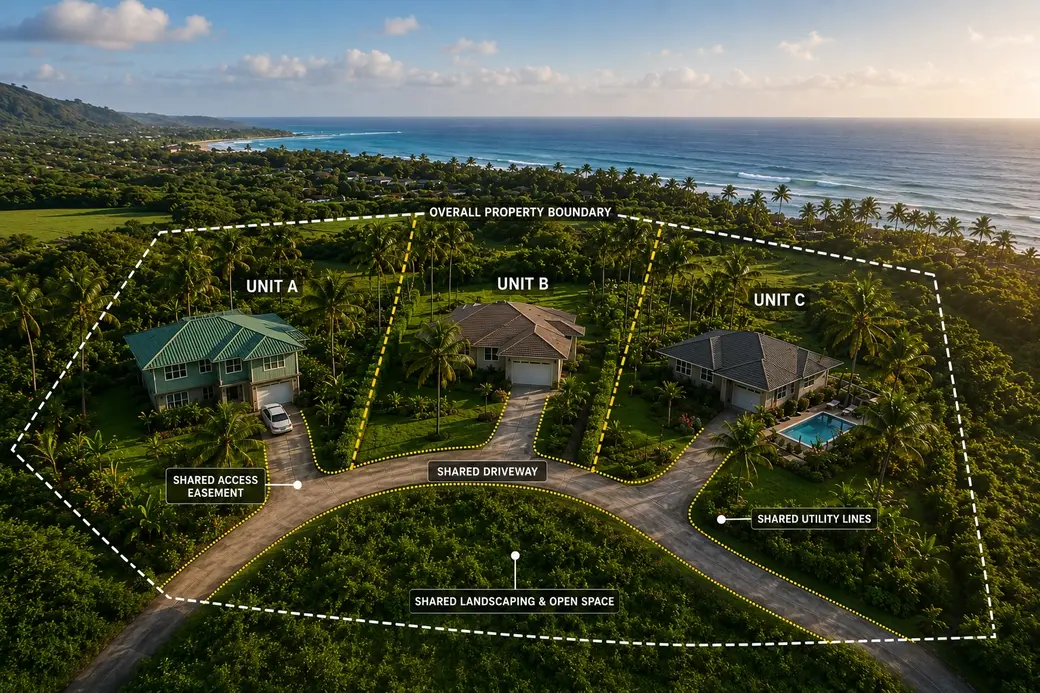
If you're considering purchasing property in Kauai, you'll likely encounter a term that's unique to Hawaii real estate: the Condominium Property Regime, or CPR. Understanding what a CPR is and how it differs from traditional property ownership is essential for making an informed buying decision on the island.

What is a Condominium Property Regime?

A Condominium Property Regime is a specific form of property ownership and governance established when real property is submitted to condominium status under Hawaii law. According to the Hawaii Department of Commerce and Consumer Affairs, CPR ownership means owning a unit along with a percentage of undivided interest in the common elements of the property.

Here's what makes CPRs unique: unlike traditional condominium apartments in high-rise buildings, CPR properties in Kauai can include detached single-family homes that appear completely separate from one another. In fact, a significant percentage of single-family homes on Kauai are actually CPR units. These properties may look and function like standalone houses, but legally they're condominium units sharing some form of common interest with other units.

Why Were CPRs Created?

The CPR framework was established to address a specific challenge in Hawaii's development landscape. Historically, Kauai worked to preserve its rural character and encourage agricultural use by restricting how small individual land parcels could be subdivided. This resulted in relatively few property owners holding large tracts of land capable of accommodating multiple dwellings.

CPR law, governed by Hawaii Revised Statutes Chapter 514B, provides property owners and developers with a mechanism to divide larger parcels into smaller, sellable units where traditional subdivision would otherwise be restricted or economically unfeasible. This allows for increased housing options while respecting the island's zoning and land use regulations.

CPR vs. Subdivision: Understanding the Difference

It's crucial to understand that creating a CPR is not the same as subdividing property. The CPR process cannot determine what can be built on a property, how many units can be placed, or change any building, zoning, or usage restrictions imposed by local laws. These parameters are still dictated by the County of Kauai Planning Department and existing zoning regulations.

⚠️ Important Consideration The CPR process does not increase the density or number of structures allowed on a property. If county zoning permits only one dwelling on a parcel, creating a CPR doesn't change that restriction. The county's Comprehensive Zoning Ordinance (CZO) defines density, not the CPR designation.

Types of CPR Properties

CPR designations can apply to various property types on Kauai, including:

  • Traditional Condominium Apartments: High-rise or multi-story buildings with shared common areas like pools, recreational rooms, and lobbies
  • Detached Single-Family Homes: Houses that appear completely separate but share common land ownership
  • Townhouses: Attached residential units with shared walls
  • Commercial Properties: Office buildings and retail spaces
  • Mixed-Use Developments: Combinations of residential, commercial, or industrial units
  • Agricultural Properties: Farm or ranch units on larger parcels

How CPRs Matter for Buyers: Key Considerations

1. Ownership Structure and Rights

When you purchase a CPR unit, you're acquiring exclusive ownership of your designated unit along with a proportionate share of the common elements. While you have your own separate fee-simple ownership with an individual deed, mortgage, and insurance requirements, you're also part of a collective ownership structure.

2. Common Elements and Shared Responsibilities

Depending on the specific CPR development, you may share various common elements with other unit owners. These can include:

  • Access roads and driveways
  • Septic systems or wastewater treatment facilities
  • Utility infrastructure (water, electric, internet)
  • Shared walls or fences
  • Recreational facilities
  • Landscaped common areas

You'll need to work collaboratively with your fellow unit owners to maintain and repair these shared elements, which may involve ongoing financial contributions.

3. Association of Apartment Owners (AOAO)

A well-structured CPR should have an Association of Apartment Owners (AOAO) that serves as the governing entity for the development. Condominium associations with six or more units are required to register annually with the Hawaii Real Estate Commission.

The AOAO typically establishes:

  • Covenants, Conditions & Restrictions (CC&Rs)
  • Rules and Regulations
  • Maintenance fee schedules
  • Standards for the development
💡 Did You Know? Not all CPRs have association fees. Some detached CPR homes have no discernible shared common elements and therefore no monthly maintenance fees. However, others may have substantial HOA fees comparable to traditional condominiums. Always verify this during your due diligence.

4. Property Development Restrictions

One critical aspect buyers must understand is that in the eyes of the County of Kauai Planning Department, your CPR unit is considered one component of the cumulative CPR development. This means decisions about what physical structures you can build, their size, or approved uses for your unit are evaluated in consideration of what already exists in the development as a whole.

You cannot simply build whatever you want on "your" land, even though you hold exclusive ownership of your unit. The overall development's existing structures and uses factor into county approval processes.

⚠️ Zoning and Code Violations Be aware that zoning and building code violations or fines assessed against one CPR unit can potentially be attributable to the property as a whole. This interconnectedness means you have a vested interest in ensuring all unit owners maintain compliance with county regulations.

5. Identifying CPR Properties

CPR properties can be identified through their Tax Map Key (TMK) numbers. While standard properties have TMK numbers formatted like 4-4-6-5-32, CPR units include an additional digit at the end (e.g., 4-4-6-5-32-1), where the final number indicates the unit number.

Property listings will also indicate ownership type as either "Full" (fee-simple) or "CPR."

6. Required Documentation Review

Before closing on a CPR property, it's essential to request and thoroughly review several key documents. This review typically takes place during your due diligence and/or through the mandatory provision of documents (Section M-1 of the Purchase Contract):

  • CPR Map: Shows the layout of units and common elements
  • Declaration of Condominium Property Regime: The foundational legal document
  • Bylaws: Rules governing the AOAO
  • CC&Rs and House Rules: Restrictions and regulations (including any prohibitions on animals, building types, or uses)
  • Master Deed or Lease: Establishes the condominium ownership structure
  • Developer's Public Report: Required disclosure statement for prospective buyers
  • Financial Documents: Budget, reserve funds, assessment history
⚠️ First-Time Sales Requirement If this is the first time a property is being sold as a CPR, the seller must deliver a developer's public report to the buyer before purchase. As a buyer, you have 30 days to review this document and rescind the purchase if necessary. Don't waive this protection without consulting with legal counsel.

7. Financing Considerations

The good news for buyers is that Hawaii-based lenders are generally familiar with and comfortable financing CPR properties. The unique ownership structure that might concern mainland lenders is well-understood in the local lending market, providing buyers with a wide variety of local financing options.

However, it's still important to discuss your specific CPR purchase with your lender early in the process, as some CPR configurations may have unique financing considerations.

8. Tax Implications

CPR ownership can affect your property taxes in several ways:

  • Each CPR unit receives a separate property tax assessment
  • The total real property taxes for the overall parcel typically increase after CPR conversion
  • If you own multiple CPR units, you can generally claim a homeowner's exemption for only one unit
  • Some CPR units may be taxed at a higher "apartment" rate rather than residential rates

9. Agricultural CPRs: Special Considerations

Some CPR properties on Kauai are created on agriculturally-zoned land. In these cases, unique restrictions may apply. For example, one unit might be designated as the "main residence" while another is classified as a "cottage" with strict size limitations (often not exceeding 1,000 square feet of interior living area). These designations and restrictions stem from the underlying agricultural zoning and must be understood before purchase.

Due Diligence: Questions to Ask Before Buying

Before purchasing a CPR property in Kauai, prospective buyers should investigate:

  1. What are the shared common elements? Understand exactly what you'll be sharing with other unit owners.
  2. Are there association fees? If yes, how much are they and what do they cover?
  3. What restrictions exist? Review all CC&Rs and rules carefully for any limitations on property use, animals, vehicles, or renovations.
  4. What is the financial health of the AOAO? Review budgets, reserve funds, and any history of special assessments.
  5. Are there any pending legal issues? Check for disputes, liens, or violations affecting any unit in the CPR.
  6. What development rights remain? Can additional units be added to the CPR? Are there expansion plans?
  7. What building/development can I do on my unit? Consult with the County Planning Department about specific limitations.
  8. How well does the AOAO function? Speak with current owners about their experience with the association's management.

Working with Professionals

Given the complexity of CPR ownership, it's strongly recommended that buyers work with experienced professionals throughout the purchase process:

  • Real Estate Agent: Choose an agent with specific experience in CPR properties on Kauai
  • Real Estate Attorney: Engage an attorney familiar with Hawaii Revised Statutes Chapter 514B to review all CPR documents
  • Mortgage Lender: Work with a Hawaii-based lender experienced in CPR financing
  • County Planning Department: Consult directly about development restrictions and zoning requirements

Conclusion

Condominium Property Regimes represent a unique and important ownership structure in Kauai's real estate landscape. While CPRs provide opportunities for homeownership and property development that might not otherwise exist, they also come with specific responsibilities, restrictions, and considerations that differ from traditional full ownership.

For prospective buyers, understanding the CPR structure before purchasing is not just advisable—it's essential. By thoroughly reviewing all documentation, asking the right questions, and working with experienced professionals, you can make an informed decision about whether a particular CPR property is the right fit for your needs and goals.

Whether you're looking at a detached single-family home that happens to be a CPR unit or a traditional condominium apartment, taking the time to understand this unique ownership form will help ensure a successful and satisfying property purchase in Kauai's beautiful and distinctive real estate market.

Sources and Additional Resources

Primary Legal Authority

Hawaii Revised Statutes Chapter 514B (Condominiums) — The governing statute for all condominiums created after July 1, 2006
Available at: Hawaii Department of Commerce and Consumer Affairs, Real Estate Branch

Government Resources

County of Kauai Planning Department — Condominium Property Regimes (CPR)
4444 Rice St., Suite A473, Lihue, HI 96766
Website: www.kauai.gov

Hawaii Real Estate Commission — Condominium Specialist
335 Merchant Street, Room 333, Honolulu, HI 96813 · (808) 586-2643
Website: cca.hawaii.gov/reb

Educational Resources

"So You Want To Go Condo" — Official brochure from the Hawaii Real Estate Branch
Available at: cca.hawaii.gov/reb

This article is intended for educational purposes only and does not constitute legal, financial, or real estate advice. Prospective buyers should consult with licensed professionals including real estate agents, attorneys, and financial advisors before making any property purchase decisions.

Ryan Nunez
Ryan Nunez

Broker Associate | RB 24607

+1(808) 346-3051 | ryan.islandproperties@gmail.com

GET MORE INFORMATION

Name
Phone*
Message