
What Is A CPR? Condominium Property Regime Explained
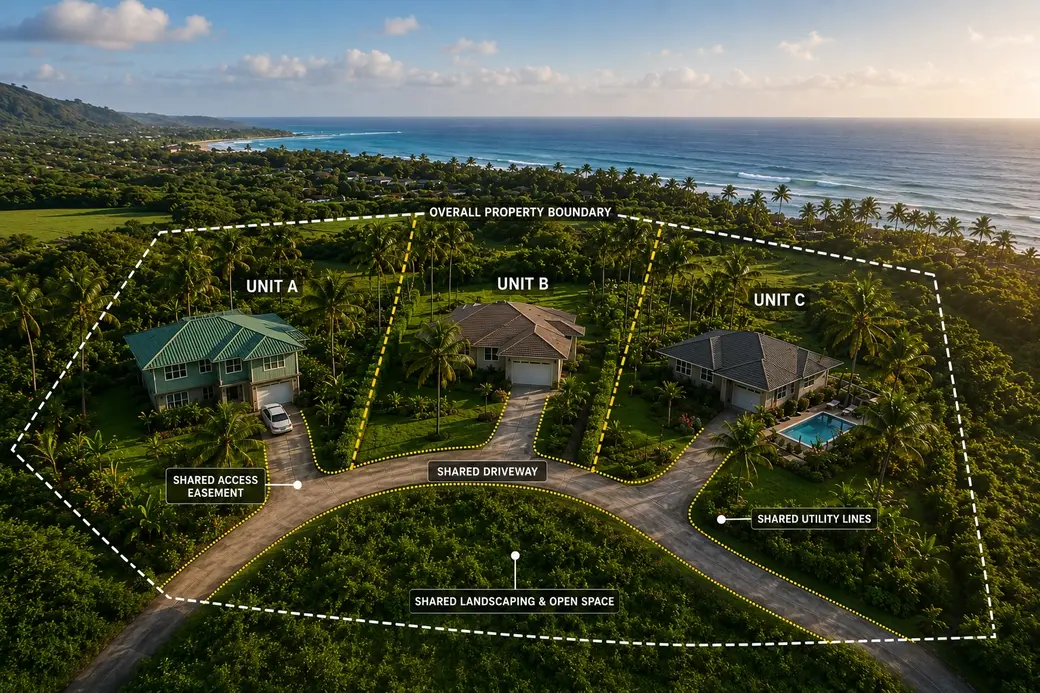
Short answer: A CPR, or Condominium Property Regime, lets one piece of land be legally divided into multiple ownership units without going through traditional subdivision. On Kauaʻi, it's extremely common, and many buyers purchase a CPR property without realizing it until they're already in escrow.
5 minute read: Below I'll explain what a CPR actually is, why it matters to you as a buyer, what to watch for, and the questions I hear most often from clients.
In Plain English
Imagine you own a five acre property in Kōloa. Instead of officially subdividing it into four separate lots, you legally create four separate ownership areas while keeping the property under one overall legal parcel. That's essentially what a Condominium Property Regime, or CPR, allows.
On Kauaʻi, CPRs are extremely common, and not just in condo buildings. Many single-family homes that look completely separate from one another are actually CPR units sharing one underlying parcel. Buyers frequently purchase CPR properties without realizing it until they're already in escrow, reading unfamiliar terms on their title report for the first time.
Why This Matters
If you're buying on Kauaʻi, whether a property is a CPR can affect:
- Financing and which lenders will approve the loan
- Insurance requirements and coverage structure
- Property rights, including what you can and can't build
- Future building opportunities on your unit
- Vacation rental eligibility
- Maintenance responsibilities for shared elements
- Resale value and how easily the property will sell later
The Technical Explanation
A Condominium Property Regime is a specific form of property ownership and governance established when real property is submitted to condominium status under Hawaii law. CPR ownership means owning a unit along with a percentage of undivided interest in the common elements of the property, governed by Hawaii Revised Statutes Chapter 514B.
Unlike traditional condominium apartments in high-rise buildings, CPR properties in Kauaʻi frequently include detached single-family homes that appear completely separate from one another. A significant percentage of single-family homes on Kauaʻi are actually CPR units. The framework was created to give property owners a way to divide larger parcels into smaller, sellable units in situations where the county's subdivision rules would otherwise make that difficult, particularly on land that was historically kept in large agricultural tracts.
What Does This Look Like?
Each unit is individually owned, financed, and insured, but a CPR can also involve shared responsibilities among the unit owners, most commonly a driveway, a potable water line, a septic or wastewater system, or an easement. Not every CPR shares all of these. Some share just one, some share a few, and some share none at all. This is the piece that catches buyers off guard: your deed covers your unit, but the CPR Declaration determines which of these, if any, you share and with whom.
Common Questions I Hear From Buyers
Usually not without county approval, and it depends entirely on the zoning and what's already built on the overall parcel. The CPR designation itself doesn't grant additional building rights.
Often yes, but check the CPR Declaration and any CC&Rs first. Some CPRs restrict fencing, especially where it would block a shared driveway or easement.
Depends on the CC&Rs and whether the underlying zoning is residential or agricultural. This is one of the most commonly overlooked restrictions in CPR documents.
Only if the property is in a designated Visitor Destination Area or holds a valid legacy permit, and even then, the CPR's own rules may add further restrictions on top of county law.
Generally yes. Hawaii lenders are familiar with CPR ownership, though some configurations, particularly agricultural CPRs, may require extra documentation.
Yes, CPR units are sold and financed regularly on Kauaʻi. The key for resale is having clean, well-documented CPR paperwork so future buyers and lenders don't hit surprises.
Not directly, but if a project affects shared elements like a driveway, water line, or easement, other unit owners typically need to be consulted or may have a say under the Declaration.
Kauaʻi Examples
Many agricultural CPR properties have shared driveways or utility easements connecting several units on one underlying parcel. It's why reviewing the CPR Declaration and condominium map matters so much before making an offer, two properties can look nearly identical in photos and have very different ownership structures underneath.
Mistakes Buyers Make
Every one of these came from a buyer who found out after closing rather than before. The information is almost always available in the CPR Declaration and condominium map, it just has to be requested and actually read.
My Advice
Whenever I represent buyers purchasing a CPR property, one of the first things I review is the CPR Declaration, condominium map, easements, and any shared maintenance agreements. Two CPR properties can look nearly identical online but have very different ownership rights underneath. Understanding those differences early helps avoid surprises later in escrow, not after you've already moved in.
If You're Researching CPR Properties, Read These Next
Sources
Hawaii Revised Statutes Chapter 514B (Condominiums) — the governing statute for condominiums and CPRs created after July 1, 2006
County of Kauaʻi Planning Department, Condominium Property Regimes (CPR) guidance
This article is intended for educational purposes only and does not constitute legal, financial, or real estate advice. Prospective buyers should consult with licensed professionals including real estate agents, attorneys, and financial advisors before making any property purchase decisions.
Categories
Recent Posts